
What is HYROX?
by Rob Flett on Wednesday 13 May 2026
4 min read
What is HYROX?
For decades gym-goers have yearned for an outlet beyond the standard gym floor. Something to scratch their competitive itch in a fresher and inclusive environment.
Then, in 2018, professional event organiser, Christian Toetzk, and former Olympic-field hockey athlete, Moritz Fürste, hosted the first HYROX event – positioning the event as an intelligent and challenging race, designed with familiar exercise stations(1).
Now this “gym race” has revolutionised the fitness industry and set a whole new standard for both exercise and competition around the world.
What is the HYROX event order?
HYROX has a consistent race format. This means participants know exactly what to expect from the race and their training programs. A key component is its variety in divisional selection, allowing participants to choose how they’d prefer to compete and perform. This includes options such as individual (open or pro), double (two-person team), relay (four-person teams) and adaptive (supporting needs)(2,3).
What are the HYROX stations in order?
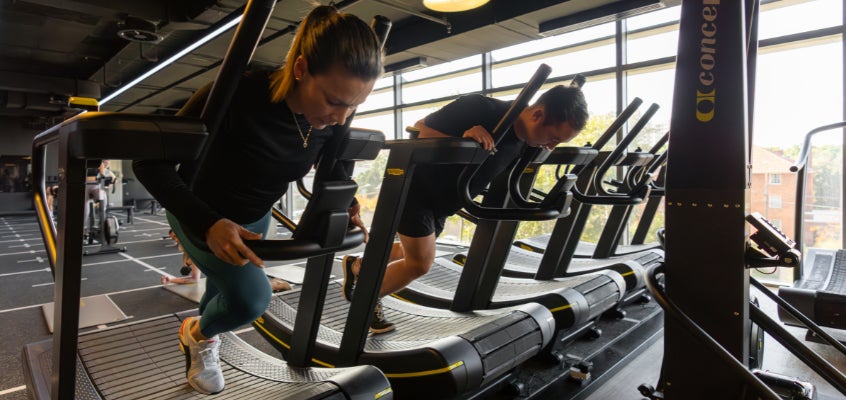
The HYROX standard format includes 8 stations separated by 1km runs (8 km total running), completed in the same order worldwide:
- Ski Erg (1,000m)
- Sled Push (50m)
- Sled Pull (50m)
- Burpee Broad Jumps (80m)
- Row (1,000m)
- Farmer’s Carry (200m)
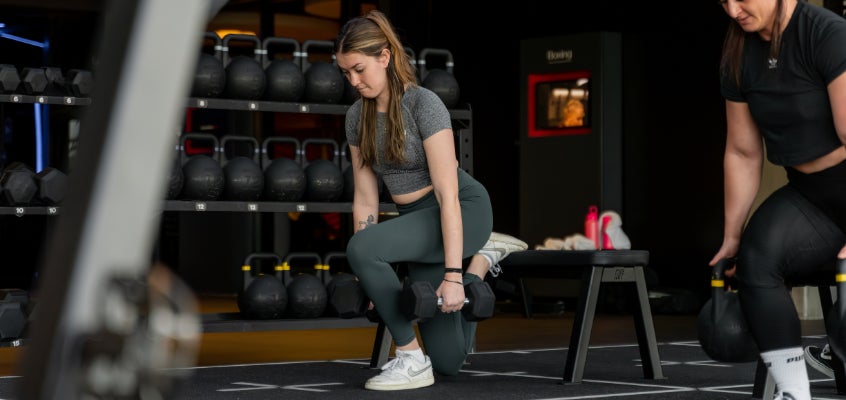
- Sandbag Lunges (100m)
- Wall Balls (100 reps)
How to train for HYROX
A common misconception is that HYROX training involves completing the entire race in a single training session (also known as 'full simulation'). While some participants prefer to train this way, it’s not the case for most training sessions. Appropriately designed training focuses on improving movement proficiency and isolating the energy systems needed for race success. This is done by building exercise capacity gradually over time, rather than simply emptying the tank every session.
Beyond the competition environment, HYROX has now become a training style, gaining increasing popularity within group exercise timetables. Its race format has become a fun way to develop aerobic base and strength endurance, while simultaneously allowing participants to compare their personal best to global standards.
To compete or not to compete
You don’t need to complete in HYROX to experience its benefits for your physical and mental health, but there’s merit to its seasonal training approach. Seasonal training can maximise motivation and self-fulfilment, not just to your regularly training routine, but overall fitness goals. Studies have shown that maintaining a ‘date on the calendar’ perspective is a powerful way to stay motivated and follow your training goals. It has also been proven to improve exercise adherence(4,5).
It’s hard to not look at the copious amounts of ultra-fit participants partaking in the race and not feel intimidated. Yes, you need to train and properly prepare before competing in HYROX, but it doesn’t mean making your body look a certain way, nor is it only for a certain “type of person”. It’s important to note that HYROX was built on inclusivity and accessibility, with the experience made with the average fitness enthusiast in mind. Most events boast a 99% completion rate, as there is no finishing time restrictions to race events, meaning there’s no need to rush or push yourself to an extreme that you're uncomfortable with.

For those who prefer the fun of HYROX, the doubles and relay events are a perfect way to not only train with friends and put your grit to the test, but challenge your collaborative and endurance skills in a safe and welcoming environment.
Plus, HYROX start times are scheduled in waves to reduce any chaos and ensure safer race starts.
Regardless of its competitive nature, there’s a reason HYROX is expanding across the fitness industry: it focuses on maximising enjoyment and satisfaction through exercise(6,7). More specifically, improving oneself as part of a group has also proven to satisfy exercise enjoyment. The HYROX community is highly motivating, encouraging both yourself and others to reach their personal best.
Everything you need is inside
At Virgin Active, we can get you HYROX ready, with a variety of training options available. If you’d like to dip your toe in, our HYROX Group-Exercise classes are a great starting point, while our HYROX Small Group Training is perfect for those who don’t want to get lost in the crowd and train with an expert coach with and tailored training programs.
About the author

Rob Flett is the National PT Manager at Virgin Active Australia. He is the national lead for personal-training onboarding, education, career development and assessment.
Rob has over 10 years of personal training experience with a Bachelor of Sport & Exercise Science (HONS), including research in applied biomechanics at the University of Technology. Rob is not only dedicated to supporting and educating many in the world of health and fitness, but also masters the art and discipline during his training as a brown belt in Brazilian Jiu Jitsu.
References:
- HYROX. Rulebook. https://hyroxaustralia.com/rulebook/
- HYROX. The history. https://hyrox.com/the-history/
- HYROX. The fitness race. https://hyrox.com/the-fitness-race/
- McVinnie, Z., Plateau, C. R., Lane, A., Murphy, N., & Stevinson, C. (2023). Effects of engaging in mass participation sporting events on physical activity behaviour: A systematic review. Health Promotion International, 38(2)
- Peng, S., Othman, A. T., Yuan, F., & Liang, J. (2022). The effectiveness of planning interventions for improving physical activity in the general population: A systematic review and meta-analysis of randomized controlled trials. International Journal of Environmental Research and Public Health, 19(12), 7337.
- Stevens, M., Rees, T., Coffee, P., Steffens, N. K., Haslam, S. A., & Polman, R. (2017). A social identity approach to understanding and promoting physical activity. Sports Medicine, 47(10), 1911–1918.
- Burke, S. M., Carron, A. V., Eys, M. A., Ntoumanis, N., & Estabrooks, P. A. (2006). Group versus individual approach? A meta-analysis of the effectiveness of interventions to promote physical activity. Journal of Sport & Exercise Psychology, 28(1), 19–35



Enjoying our blog?
Sign up to our newsletter to get updates on training, healthy living, news and events.